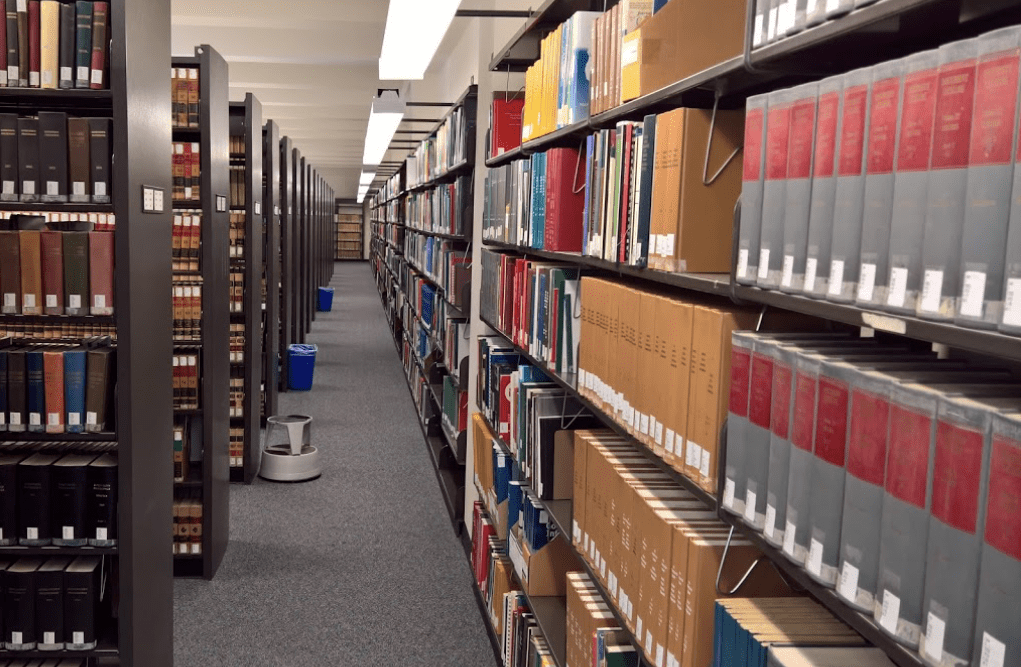
The Charles B. Sears Law Library, located on the second through seventh floors of O’Brian Hall is my favorite place on UB’s entire north/south campus. Libraries symbolize sophistication, intelligence, new endeavors, knowledge, and wisdom. While spending time inside the Law Library I notice the scent of the books, the structure and order of the book cases, and the quiet studious students, all of which serve inspiration to me.
On the third floor of the library, surrounding the perimeter of the room, are desks that seem to be almost hidden behind the book shelves. The desks are larger than most providing ample amount of space for laptops, notebooks, and textbooks. The reading lamp on the desk has a switch – when I turn it on I feel passionate that this is me, in my element, prepared to put in blood, sweat, and tears on the task at hand.
In general I love all libraries, but in particular Charles B. Sears Law Library because I am studying Political Science. The opportunity to obtain endless amounts of Law knowledge at the University at Buffalo makes me optimistic for my future, and determined to practice law in New York State.
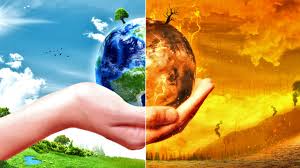
Global warming is a risk to the entire world and is finally gaining more attention now in the 21st century. The economy is asking dynamic questions about increasing global temperatures and its effects in attempt to value the future.
Scientists have already determined the environmental damage that will be done by global warming. Economists are now working hard to unpack how this will take a toll on specific regions that offer the most economic value to the world.
Global warming is the earths response when greenhouse gases, air pollutants, and carbon dioxide are trapped in the atmosphere and collect heat. In the United States, electric companies burn fossil fuels which is one of the largest sources of heat-trapping pollution.
Green gas emissions melt artic glaciers causing sea levels to increase continuously causing small islands to disappear and coastlines to deteriorate. These natural disasters do not only ruin civilizations they also displace all people who live in them.
Emissions are produced in mass amounts in the United States, China, the United Kingdom and many smaller countries. Greenhouse gasses have dramatically increased due to human behavior, especially in the United States. More human consumptions equals more green gas emissions. This goes for just about every market in modern day America.
The Paris Agreement Treaty of December 2015 is an agreement that countries will reduce the amount of green gas emissions they put out into the global sphere. The goal is to reduce the numbers in half to help climate change slow down. The risks and impacts are acknowledged by most Nations but the United States under the Trump Administration backed out of the treaty.
Extreme weather in South America has displaced hundreds of thousands of families, yet they are not welcomed in America. This truth is sad but very real.
The United Nations Framework Convention on Climate Change (UNFCC) is an international treaty working to save the environment from global warming and excessive green house gases. The United States could financially afford to contribute to the UNFCC and cut green gas emissions by creating a thorough plan using environmentally safe strategies to fuel.
Across the globe nations do not put out the amount of green gas emissions as the United States, in fact, the country puts out nearly double compared to China. Nations are aware that the United States is the number one contributor and the result is affecting pacific countries and the Global South areas who do not have the economic capacity to rebuild themselves.
Researchers have been calculating the damage by each tenth of a degree when the temperatures rise. The ocean and the atmosphere have had an increase in temperatures steadily over the past 50 years.
Projections are uncertain, however, it is very clear that each year has been record breaking for increased temperatures across the globe. Climate Nexus uses the Climate Tracking Tool to look at the United States ratio between hot and cold temperature records. In the past year in the United States there was 1.42 high temperature record for every one low temperature record. An increase in record highs and an increase of record lows is due to global warming and climate change.
Influential economists have decided it’s time to make a change to penalize countries for their global emissions. By placing a tax on global emissions it would demand immediate national response. Carbon taxes are fee’s incurred from burning fossil fuels, also known as carbon-based fuels, and the content of them.
Some countries face increased hardship from green gas emissions and climate change.
The Eastern Pacific region is facing rising sea levels more in the 21st century than ever before. Climate change is causing storms to be murderous, leaving vast amounts of region to be completely displaced and ruined.
The Philippian people are fighting for their economy, and in an inevitable battle against typhoons. The United States is one of the strongest nations in the world that could potentially assist this region, although under the Trump Administration, climate change is often ignored, and seen as inaccurate information.
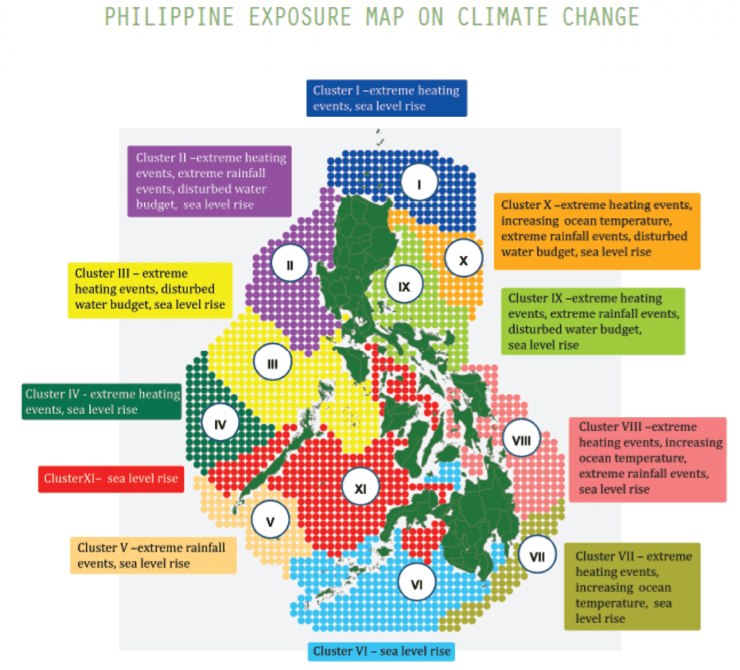
A report by the Philippine Department of Environment and Natural Resources shows how different areas in the Philippines will be challenged with a range of climate threats, based on where they are located.
Right now, islands in the Philippines are underwater and the coastlines have been destroyed due to typhoons, tsunamis, hurricanes, and other climate related reasons. Climate change will cause economic and social inequality between citizens who are environmentally safe and not environmentally safe. These individuals and their families will be forced to leave thus making them climate refugees.
Displaced members of society equal short staffed factories unable to keep up with product demands. Individuals lose their jobs after natural disasters because all structure is lost. Companies forfeit or may be sold. Economies collapse.
Large companies do not want to invest in factories located in eastern-pacific countries due to natural disasters striking time after time. Although labor is much cheaper and much more efficient.
With an increase in temperatures, warehouse workers are put at risk for unsafe working conditions. The internal temperature inside workplace environments is becoming unsustainable and the temperatures outside are even worse.
“Owing to their proximity to the sea, island states are particularly exposed to the natural hazards of cyclones, flooding and sea level rise,” the U.N. report explains. “Very high exposure is a significant risk driver, although a high development level can counteract this substantially, as the example of the Netherlands shows.”
The cost to rebuild infrastructure that can sustain these extreme weather conditions is expensive and executives find it more important to make a profit than to help keep human life safe.
All costs are not equivalent even when they are similar in terms of money. Although money may fix damages, some events negatively impact human life and sometimes even irreversible damage is done to both people and the environment. Mass food and water shortages and refugee crisis’ affect many eastern pacific countries.
Acknowledge the potential economic costs of climate change:
crop yields decrease in response to warmer temperatures due to less fertile land
street pavement needs revamping in response to floods due to rising sea levels
expensive power grids are required in order to sustain extreme weather
The United States southern border is deteriorating due to hurricanes and other extreme weather. Since 1980, the United States has sustained over $1.6 trillion in losses due to natural disasters.
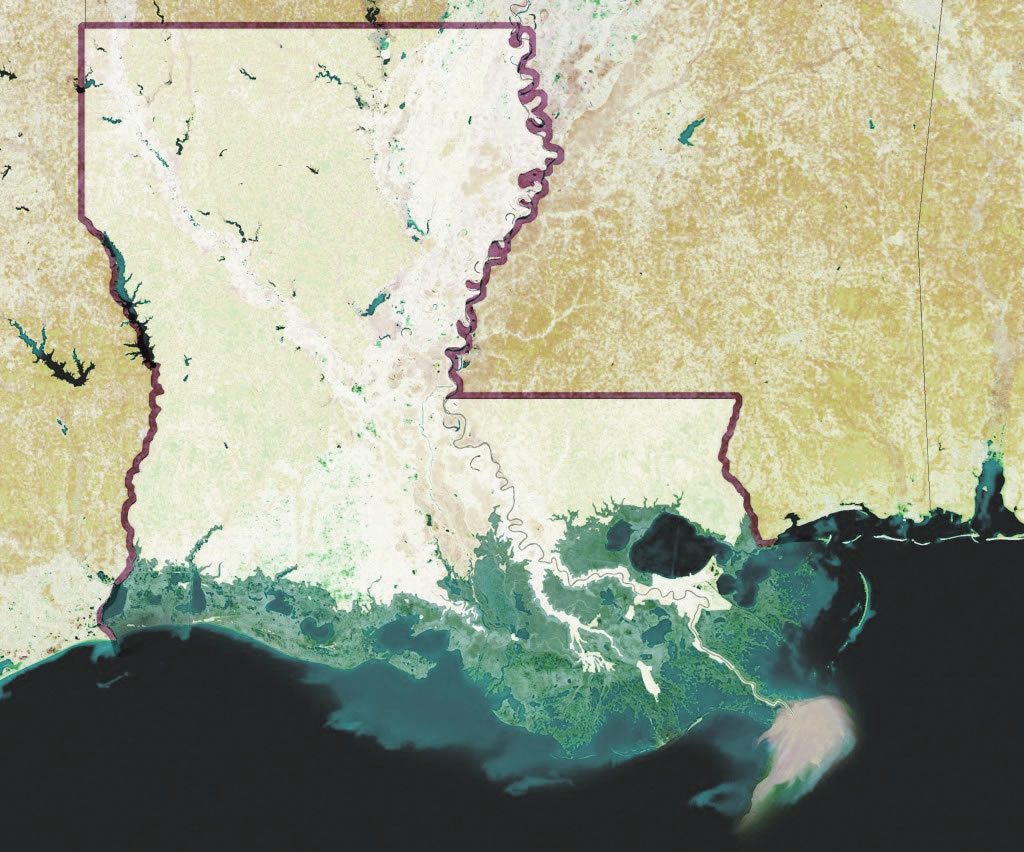
In the United States, Louisiana is highly effected by global warming and extreme weather including hurricanes.
Right now Louisiana’s coastal wetlands are disappearing at a rate of 14 square miles a year or a football field every 48 hours due to climate change. In this case the damage is irreversible and money will not be able to restore the homes and roads that once occupied the coast.
Local people report that fishing communities that housed many families in the 1980’s will never be seen again. The culture is gone. The need for change was yesterday.
“When I started fishing here 34 years ago, you had to wind through six miles of marsh, roseau canes, some cypress trees, and spoil banks to get to the Gulf,” said Ryan Lambert, president of Cajun Fishing Adventures. “Now it’s all open water. You can stand on the dock and see the Gulf”.
The reality of climate change was stunning to the generation who lived on this land before it was engulfed by the ocean. Ryan Lambert stated in an interview that he felt physically ill in response to what he’s witnessed and how young folks will never understand this is not how the coast is supposed to be.
Technology advancements help humans adapt to the evolving world, however, if the world evolves too quickly we are unable to react fast enough. For example, after Hurricane Katrina hit over 1800 lives were lost due to flooding and loss of structure.
Individuals who live on the coast in southern states that have experienced the extreme weather feel pressured to leave for a better future. Stephen Vermette, professor of geography at SUNY Buffalo State analyzed climate from 1965 to 2018 and was able to determine extreme weather indicators were unchanged over that time period. However, there were models that showed an increase in growing seasons due to increased regional temperatures.
Not only are the United States coasts deteriorating from rising sea levels but places like Buffalo, NY have experienced an increase in the daily average temperature.
Small businesses and large businesses have been somehow affected by Climate Change in the United States. Supply and demand shortages, where companies do not have money to purchase items and natural disasters are causing shortages.
How are companies directly involved with climate change?
Utilities are now filing for bankruptcy due to the heightened losses associated with natural disasters. These companies have filed for bankruptcy now amounting to $340B across the globe.
Bedrock companies that have been around for a century, that hold high standards of reliability, are failing. Pacific Gas and Electric (PG&E) a natural gas company is one of the largest utility companies in California. PG&E has had to overcome new obstacles in recent years due to climate change. They operate power lines and towers that have a service life from 65-100 years old.
In the past risks associated with old equipment breaking down are not dangerous because it happens after a long winter etc. However, these power lines are facing extreme weather conditions such as wind and rain at different times throughout the year causing brush fires that result in entire towns to burn to the ground. These risks have never been ruled out.
The insurance industry makes up more than 10% of America’s Gross Domestic Product (GDP). If this industry is suffering due to extreme weather and climate change then the rest of the country can count on other sectors of the economy feeling pressure.
Unprecedented losses associated with claims are throwing off risk assessments.
Insurance companies have stopped profiting from premiums because the damages have cost much more. These losses not only effect the company but the consumer as well. Risks are hard to measure considering the future of climate change is hard to predict.
These companies have been forced to raise their premiums in order to sustain and make a profit. Unfortunately, the monthly premiums insurance companies charge are too expensive for an average consumer.
Consumer activists have fought for new legislation to ensure insurers cannot raise their rates. Companies may not change premiums all at the same time in response to natural disasters. If insurance companies increase premiums in unison they may face legal consequences such as collusion and other anti-trust charges.
Congress created the National Flood Insurance Program (NFIP) in 1968 in an effort to help the public when natural disaster strikes. This program reduces the socio-economic impact of climate change and extreme weather in disadvantaged populations across the country. Floods are the most common and damaging weather events in the nation.
The NFIP provides affordable flood insurance to businesses and homeowners in high risk coastal locations. This program helps aide people who are in horrible situations caused by environmental factors. Property owners who find themselves in this situation are able to recover much more quickly and efficiently by having the necessary insurance to regain losses.
Hopefully communities, nations, and the world will work together in an effort to assist the climate change crisis and recognize the world we are living in is not something to take for granted. Future generations will forever be thankful if the world works collectively now.
According to the Essential Services Act of 2013 the term essential worker means you are a worker that performs work involving the safety of human life or the protection of property, as determined by the head of the agency. It is safe to say that health care workers are in fact essential employees.
Millions of essential health care workers are under extreme stress due to heightened risk with being infected with coronavirus. An ever more frightening risk if they are working in the emergency room or intensive care units.
Physical, mental, and emotional aspects of life for these individuals has changed forcefully. Kenmore West, and D’Youville graduate Hailey Kenerson shares her story about what she faces in the NYC Intensive Care Units.
The Facebook post resonates with the mass audience. Many supportive comments came from health care workers who relate with Kenerson. Thousands share the story accompanied by an image of her face after wearing a mask for 16 hours.
One thing health care workers can agree on is the need for everyone to collectively work hard to take social distancing precautions. Protesters in New York feel their rights are being taken from them due to state mandates. Kenerson’s response, “You have the constitutional right to protest. However, you do NOT have the right to disregard and put other people’s lives at risk. You just don’t. That’s exactly what you’re protesting for. The right to get your hair cut, nails done, or to sit in a movie theatre during an unspeakably tragic and frightening time for so many. The right to help spread a deadly and extremely infectious disease to both your loved ones and complete strangers”.
New York City is the epicenter for Covid-19. Today there are 282k confirmed cases across the state. The number of deaths is up to 16,599. Health care workers are devastated by how many lives have been lost. “This disease does not discriminate. It just claims lives” said Kenerson.
Personal protective equipment (PPE), such as N95 masks and hazmat suits, need to be available in order to keep the health care system from collapsing.
It is essential to keep employees inside of the hospitals as safe as possible so they don’t fall ill to coronavirus. New York state currently has enough PPE however there is a shortage in ventilators and hospital gowns.
“I hope your loved one doesn’t end up in an ICU bed, intubated, ventilated, sedated, paralyzed and fighting for their life. Nobody deserves this. But if they do, I promise I will fight my absolute hardest along side all of my heroic coworkers at the bedside to get them home to you. I hope you aren’t on the receiving end of a devastating phone call” said Kenerson.
The amount of emotional labor these workers endure each day is nothing short of impressive. Despite the task at hand, Kenerson continues to show up. Health care workers continue to work diligently. They are the true heroes.
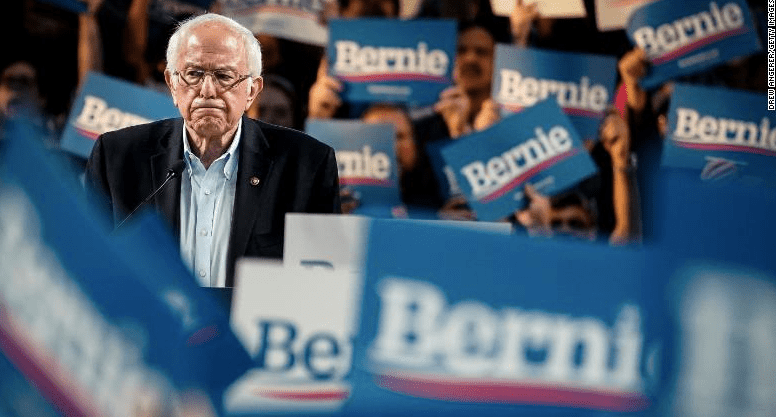
On Wednesday Senator Bernie Sanders ended his active campaign after expressing there is ultimately no way of winning against President Donald Trump or democratic opposition Joe Biden.
The coronavirus negatively impacted the campaign and states ended up postponing their primaries. At that moment in time many Sanders advocates realized there was no return. A lot of emotional responses were trending on Twitter and other social media platforms expressing the dread of Trump possibly winning the election.
Bernie Sanders has been backed by grass-root supporters, and the youth. The senator had a radical agenda that would help the future of the youth by providing free college tuition, also erasing student loan debt. Many voters did not agree with his revolutionary ideologies and his agenda was not appealing enough to the electoral college.
Making sense of the 2020 election is going to be very interesting for political scientists across the United States. Universities and other institutions are analyzing the impact Bernie Sanders ideas have had on other candidates. Many social issues Americans express quite frequently but are unacknowledged were finally recognized and addressed by the Vermont Senator.
How will this affect the rest of the presidential race? The democratic party is going to have to work diligently to bring all working-class people, of all racial identities together to win the popular vote and demand the same from the electoral college.
My experience as a student at the University at Buffalo has shown me a lot about Bernie Sanders as a presidential candidate. Attending the Bernie Sanders Rally in Alumni Arena was a movement! With more than 8,000 people all supporting his ideologies- the event was nothing short of amazing.
The youth and other social organizations want to see a progressive future and Uncle Bernie voiced their concerns about college tuition, healthcare for all, and the environment.
During the winter semester in 2018 I took a political science class called “Making Sense of the 2016 Election” which framed the process in a way we could understand both perspectives. Bernie Sanders had little support back then, and barely any funding for his campaign.
The Bernie Sanders campaign in 2020 stood much stronger than in 2016 because of his large increase in grass-root supporters. Donations generally came from amounts less than $200 and tons of them whereas Joe Biden received less money from large amount donations.
Bernie also stood in the race 2 months longer than Elizabeth Warren. Although, Sanders may have had similar ideologies as Warren she did not endorse him due to his supporters behavior on social platforms.
Many voters tweeted #WarrenIsASnake and sent her snake emojis. Warrens reaction caused many Americans to question Bernie Sanders about her endorsement. The Sanders campaign stayed a safe distance from this question.
Bernie Sanders will still be listed on the ballot in November along with Joe Biden and Donald Trump. Covid-19 made it very difficult for the primaries, caucuses and other political activities to be held. This leads many Americans to wonder how election day will be held this year.
The best article I read this week was, “How Billie Eilish Is Reinventing Pop Stardom” by Rob Haskell. This piece is based on the recent issue of Vogue where Eilish is featured on the front cover of the magazine. Eilish is 18 years old, being so young in her career it is admirable to see the star on the cover of Vogue.
The article features many images and portraits of the young anti-pop star displaying her love for the color slime green through her own expression. Billie’s quotes throughout the article have a larger font size, emphasizing her words to the reader.
“This whole time I’ve been getting this one sentence, like, I’m a rule-breaker. Or I’m anti-pop, or whatever. It’s like, where, though? What rule did I break?”-Eilish
Vogue magazine is an elite piece, throughout this article the language used was rather elegant which enticed the audience more than an average article. Related articles were neatly hyperlinked with correlating topics.
A VogueVideo using artificial intelligence to interview the young artist concludes Haskell’s piece.
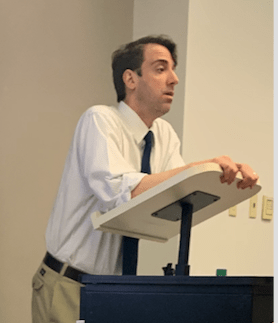
Aaron Besecker visits the University at Buffalo on Monday, March 9 for a press conference where students asked a variety of questions pertaining to his position as Crime Reporter with the Buffalo News and how he landed that position.
The conference started at 7:15pm in Capen Hall with approximately 25 students and one adjunct instructor attending.
Becksecker obtained his bachelors degree in sociology from the University at Buffalo in 2002 with no plan to pursue a career in reporting and journalism. The college graduate took a journalism course at Buffalo State College where he discovered his new found path for reporting which led him to enroll in the masters program.
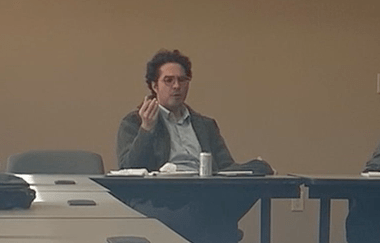
Aaron Besecker talks to UB Eng397 students and instructor
Post graduation Besecker goes out into the greater Buffalo surrounding area to cover events at all different levels. The young reporter covered matters at Buffalo City Hall, municipal meetings, town board meetings, and used media platforms for digital reports.
One of Aarons first gigs was with the The Niagara Gazette where he was able to expand his skill set. Besecker builds his momentum and an opportunity to work for the Buffalo News surfaces.
Joining the Buffalo News was validation that his work experience and education was a great foundation for his career. Aaron was responsible for breaking news which led him to his strong focus on crime and criminal justice. With access to the Buffalo Police Departments daily police reports, his job became more involved with the community. These reports assist his effort to break news before other news outlets. Besecker works diligently to report misconduct to his viewers as professionally and quickly as possible.
“I’m typically talking to people on the worst day of their life” said Buffalo News reporter Aaron Besecker. Shortly after this statement, he explains the day he covered the deadly plane crash in Clarence, NY as the “Biggest Disaster”.
Producing news reports and getting them out to viewers efficiently is a main part of Aaron Beseckers job. He explains how stories are somewhat designed to meet the expectations of subscribed viewers. Frequently based on number of views and the topics which are most viewed.
Besecker presents the stats page for the Buffalo News to the class which is an important tool for his job. “Our editors want us to do the stories that engage with readers the most”.
The Buffalo News reporter is known for his ability to cover a story and then write it anywhere from ten minutes to an hour’s time. “I think the recent number in the last three months was 92 stories in 90 days” said Besecker.
Collectively, Aaron Besecker is an accomplished individual who enjoys his craft. Comparing Besecker’s past to his present it is clear that his education from majoring in sociology and journalism has helped him be the successful news reporter he is today.
Aaron’s work brings him satisfaction, and drives him to continue doing what he loves.
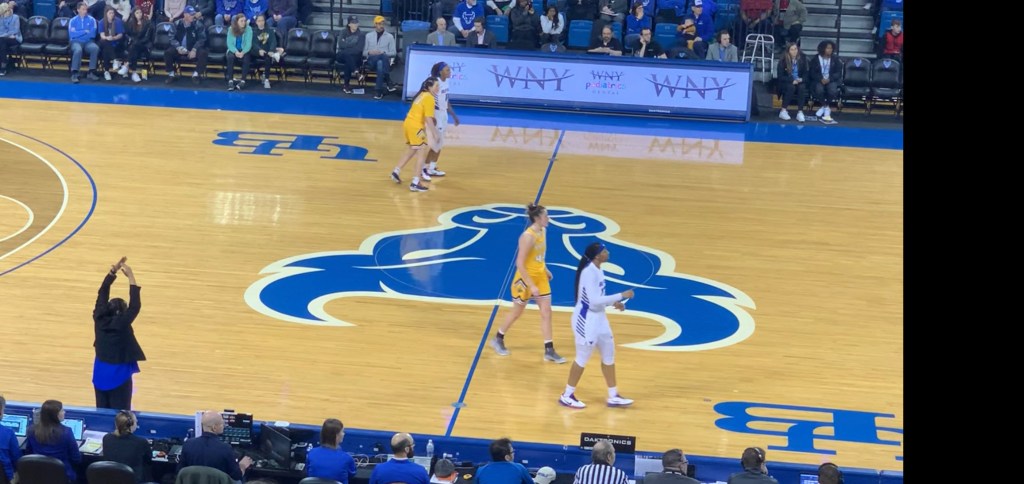
The University at Buffalo women’s basketball team defeated Kent State 72-58 at Alumni Arena. The home game started Saturday, March 7, at 2pm. A ceremony for Senior Day was held on the floor following the game.
The outcome of Buffalo’s game determined whether the team would compete in the first round of the MAC Tournament on Monday, March 9, at 5pm.
Theresa Onwuka completes an excellent play.
Head coach Felisha Legette-Jack was recognized for her 300th team win in her career. Legette-Jack was awarded a trophy basketball for her accomplishment.
Fans sat at the edge of their seat as Kent State completes three back-to-back three pointers. Buffalo completes the second quarter with a one point lead 28-27.
Post halftime show there was a shirt toss, followed by Edukids sponsored games and activities. Buffalo’s mascot Victor E. Bull posed in pictures and kept the energy flowing throughout Alumni Arena.
Marissa Hamilton and Adebola Adeyeye performed ferociously in the third, giving the Bulls a 32-27 lead. Kent State called a timeout at the 8:29 mark.
Adebola Adeyeye was disqualified in the fourth quarter after her fifth foul.
Coach Felisha Legette-Jack calling timeout.
Senior Theresa Onwuka scored her 1,000th career point during the fourth quarter. Onwuka scored 16 points and had four rebounds. Junior Hanna Hall scored 10 points. Freshmen guard Dyaisha Fair fiercely scored 25 points with nine rebounds and four steals. The Bulls continue their winning streak after five victorious wins.
“I want to say thank you to my teammates I appreciate you all,” said player of the game Theresa Onwuka. “I want to say thank you to the coaching staff I appreciate you for all you’ve done. Lastly, thank you coach Jack. I appreciate everything you’ve done for me. You’re not just a coach to me, you’re a mom. You taught me so much life lessons, you’ve taught me how to use my voice, you’ve taught me how to be a grown woman, you’ve taught me lessons that I’m going to pay to my life ahead. I really appreciate all you’ve done for me, and I love you coach.”
Theresa Onwuka and Coach Felisha Legette-Jack are interviewed after another winning game.
The Bulls performance was excellent throughout the game. Coach Felisha Legette-Jack stated, “Coaches do a tremendous job of game planning on who is the shooters and who is the drivers and we just try to make our opponent do something different,” Buffalo’s win was proof of Coach Legette-Jack’s statement.
Buffalo held another team under the 59 point mark. Coach Felisha Legette-Jack and Theresa Onwuka had big smiles on their face when recognized for that accomplishment.
“I tried to not think about me, I know it’s about senior night, but ya know, we had to win a game first, and I have more games coming in so I don’t see this as my last game, because we play on Monday too, I saw that as a game to get me to the next game.” said MVP Theresa Onwuka.
The UB women’s basketball team will play against Miami (OH) in the first round of the MAC Tournament at Alumni Arena. The UB men’s basketball team will also play against Miami (OH) on Monday, March 9, at 7:30pm.
Coronavirus is becoming a global threat and the nytimes did a great job summarizing what the latest is this week. Individuals in thirteen states across the United States have been affected by the virus and numbers continue to rise.
Washing your hands often to reduce the spread of germs was emphasized. The author used bulletins to make that point stand out to the reader which I thought was important in an effort to help educate people. The article also had a link to switch to Chinese instead of English to suit a larger audience.
Images throughout the article created a visual for the reader by displaying people in full body suits and masks. As the coronavirus spreads, health workers in hospitals are trying to protect themselves as well.
On February 21st, Paul Gowder professor at the University of Iowa addressed the issue of platform and social media governance inside of the Cellino & Barnes conference room at UB. There was a total of 35 people, ranging from students to policy makers, who attended the event. Individuals gathered in the conference room hungry as there was a great spread of catered food, and beverages. The sun was shining bright through the windows as the event began at approximately noon.
The program was listed on the center’s website, and Gowder’s ongoing work draft was available for the public to print and read prior to attending. The draft was part of the introductory chapter of his book project which attempts to shed light on the user governance problems of internet platforms including Facebook, Twitter, and Youtube. Majority of the room had a printout of the draft which appeared to be marked up with questions, concerns, and feedback.
“Some people might use Facebook to share cat pictures, others might use it to debate politics” -P.G.
A queue was created for each individual who wished to speak directly with Gowder in regards to the many issues of platform governance. There was a list of six individuals who had questions and comments. Of the six people only one completely disagreed with Gowders analogies.
Issues discussed during the event include, capacity building, spatial engagement of the internet, how profit motives become a threat to user governance, cancel culture relating to norms, social sanctions, institutions decentralizing, and having state government become involved.
Television pop culture has become quite relevant in America. I was attracted to this article on the Washington Post website because it was festive and the title, “In honor of Galentine’s Day, the definitive ranking of fake holidays from pop culture”, caught my eye. The image of Amy Poehler, Aubrey Plaza, and Rashida Jones was a nice add for the reader.
Throughout pop culture, national ‘holidays’, obviously fictional, such as 7/11 Free Drink Day, and Galentine’s Day gain a lot of attention. These are trending topics on internet platforms such as Twitter, Instagram, Facebook, etc. and also in reality throughout the U.S.
The article is broken up by ranking, and starts from eight down to one- who doesn’t love rankings? Television shows such as Parks and Recreation, The Office, Seinfeld, and movies such as Mean Girls, are all featured in the article. Between each rank the article displays a youtube clip of the scene where these fictional ‘holidays’ are portrayed. I found it interesting to view the media clips and ponder how television pop culture has influenced reality.
This week I read the nytimes article “Snow Fall — The Avalanche at Tunnel Creek” by John Branch. The story is about a group of Elites who go skiing at the notorious Tunnel Creek section of Stevens Pass (part of the Cascade Mountains in the state of Washington) and fall victim to a violent avalanche. As one can imagine, this was an extremely tragic story and the author did an excellent job executing the piece by using every little detail to illustrate how exactly it all occurred.
“Snow Fall” is divided into six chapters, each titled with what the chapter entails- great for when referencing a specific part of the story. The plot lies in the chapter called, “Blur of White”, in my opinion it is the most significant section of this piece because of how present the reader feels due to graphics alongside detailed captions, the format, real time simulations of the actual avalanche, voice recordings of the 911 responders and the victims, interviews with survivors, and the language used throughout the writing.
It was quite interesting to see the avalanche happen in real time through the simulation. I was able to better understand what the victims were experiencing during those moments. If this piece did not have the graphics and simulations incorporated throughout, I would not be able to truly visualize the situation. Words can only provide so much to a reader but visuals bring words to life. If only more articles were designed the way “Snow Fall” was!

 The A.P. Blog